
AS 3745-2010 Compliance Checklist: Key Features for Fire Safety Professionals


When it comes to protecting lives during an emergency, a well-designed evacuation diagram is one of the most important fire safety documents in any Australian building. Under AS 3745:2010 Planning for Emergencies in Facilities, evacuation diagrams play a critical role in helping occupants understand evacuation procedures, exit routes, assembly areas, and emergency equipment locations.
For fire protection companies, facility managers, building owners, and emergency planning consultants, ensuring that evacuation diagrams comply with AS 3745:2010 is essential for workplace safety and regulatory compliance.
What Are AS 3745:2010 Evacuation Diagrams?
An evacuation diagram is a visual representation of a building's emergency evacuation information. It provides occupants with clear instructions on what to do during an emergency and helps them quickly locate exits and emergency equipment.
AS 3745:2010 requires evacuation diagrams to be displayed in strategic locations throughout a building, including:
Building entrances and exits
Reception areas
Lift lobbies
Common areas
Accommodation rooms
Office floors
Educational and healthcare facilities
A compliant evacuation diagram helps occupants react quickly and safely during fire emergencies, medical incidents, gas leaks, or other evacuation events.
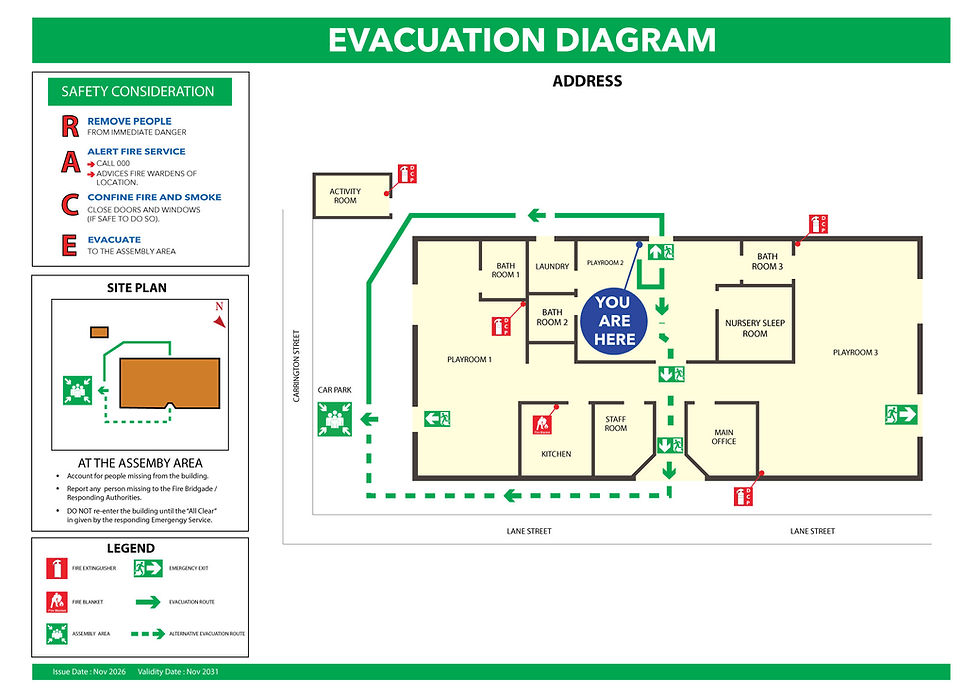
Key Features Required in AS 3745:2010 Evacuation Diagrams
To comply with Australian Standards, evacuation diagrams should include the following information:
1. "You Are Here" Location
The diagram must clearly identify the viewer's current location using a prominent "YOU ARE HERE" indicator. This allows occupants to immediately understand their position within the building.
2. Emergency Exit Routes
Clearly marked evacuation paths and emergency exits help occupants move safely towards a designated safe area during an emergency.
3. Fire Safety Equipment Locations
The evacuation diagram should display the locations of:
Fire extinguishers
Fire hose reels
Fire blankets
Manual call points
Emergency phones
First aid equipment
4. Emergency Assembly Area
The designated assembly point must be shown clearly so occupants know where to gather after evacuating the building.
5. Emergency Procedures
Many diagrams also include emergency instructions covering:
Fire emergencies
Medical emergencies
Evacuation procedures
Emergency contact numbers
6. Building Orientation
The diagram should accurately reflect the building layout and orientation from the viewer's perspective to avoid confusion during an emergency.
Why AS 3745:2010-Compliant Evacuation Diagrams Are Important
Compliant evacuation diagrams provide several benefits:
Improved Occupant Safety
Clear evacuation information enables faster decision-making during emergencies and reduces panic.
Compliance with Australian Standards
AS 3745:2010 compliance helps building owners meet their fire safety obligations and demonstrates due diligence.
Better Emergency Response
Emergency services can benefit from clearly documented building layouts and emergency equipment locations.
Reduced Risk and Liability
Accurate evacuation diagrams can help reduce legal and financial risks associated with inadequate emergency planning.

When Should Evacuation Diagrams Be Updated?
Evacuation diagrams should be reviewed and updated whenever:
Building layouts change
Walls or exits are relocated
New fire equipment is installed
Emergency procedures are modified
Assembly areas change
Annual emergency plan reviews are conducted
Regular updates help ensure diagrams remain accurate and compliant with AS 3745:2010 requirements.
Common Mistakes Found in Evacuation Diagrams
Many buildings unknowingly display outdated or non-compliant diagrams. Common issues include:
Missing "You Are Here" markers
Incorrect exit routes
Outdated building layouts
Missing assembly area information
Poor readability
Missing fire equipment symbols
Lack of compliance with AS 3745:2010 formatting requirements
Professional review and updating of diagrams can eliminate these issues and improve overall emergency preparedness.
Professional Evacuation Diagram Services Australia
Creating compliant evacuation diagrams requires attention to detail, knowledge of Australian Standards, and experience in emergency planning documentation.
At Evacuation Diagram Australia, we specialise in:
AS 3745:2010-compliant evacuation diagrams
Emergency evacuation maps
Fire safety plans
Building evacuation signage layouts
Fast online delivery Australia-wide
White-label services for fire protection companies
Our experienced team helps fire safety professionals, facility managers, and building owners obtain accurate, professional evacuation diagrams with fast turnaround times.
Need AS 3745:2010-Compliant Evacuation Diagrams?
Whether you manage a commercial building, school, hotel, apartment complex, healthcare facility, warehouse, or industrial site, compliant evacuation diagrams are essential for occupant safety and emergency preparedness.
Contact Evacuation Diagram Australia today to receive professionally designed AS 3745:2010 evacuation diagrams delivered quickly and accurately anywhere in Australia.


